Corporate Resilience Training

Pinpoints of Resilience.

Ground-level crisis training for the people your business depends on. We work with a diverse cross-section of your employees, from executives to operators, so they can act decisively and confidently when crisis reaches them, without waiting for instructions from the top.

Request a conversation → Why now
With our partners
01

New pressure to prove your people are prepared

For more than a decade, companies across Scandinavia and the Baltic states have been strengthening team resilience against cyberattacks, sabotage and FIMI, learning much of it from Ukraine, on the front line of hybrid warfare since 2014. As France approaches its 2027 presidential election, against a backdrop of growing geopolitical uncertainty, French companies are exposed to similar pressures. Regulators, clients and insurers are starting to ask for proof that preparedness reaches beyond the executive committee.

EU · Directive (EU) 2022/2555

NIS2 Directive

For essential and important entities, mandatory risk-management measures include business continuity and crisis management, cyber hygiene and training, and human resources security (Art. 21(2)(c), (g), (i)). Management bodies must follow training, and entities are encouraged to train employees regularly (Art. 20(2)).

NATO · Adopted 15 September 2026

2026 Resilience Baseline Requirements

Allies are to “facilitate and encourage” civil and commercial stakeholders “to consider including contingencies for crisis and conflict situations into their respective business continuity planning” (§3). Threats considered include sabotage of critical infrastructure, cyberattacks and harmful economic activities (§6).

What this means for your company

01

The obligation is direct if you are in NIS2 scope

Energy, transport, banking, health, water, digital infrastructure, ICT service management, food, manufacturing and more.

02

The pressure is indirect but rising from NATO’s Baseline

It reaches companies through national implementation, public contracts, clients and insurers.

03

The exposure is concrete for companies with affiliates, staff or supply chains in Ukraine, Russia or neighbouring countries

Asset seizure, attacks on offices, staff under strain, and the erosion of trust when the fear of an insider threat sets in.

Plans rest on a few leaders. Continuity rests on everyone.
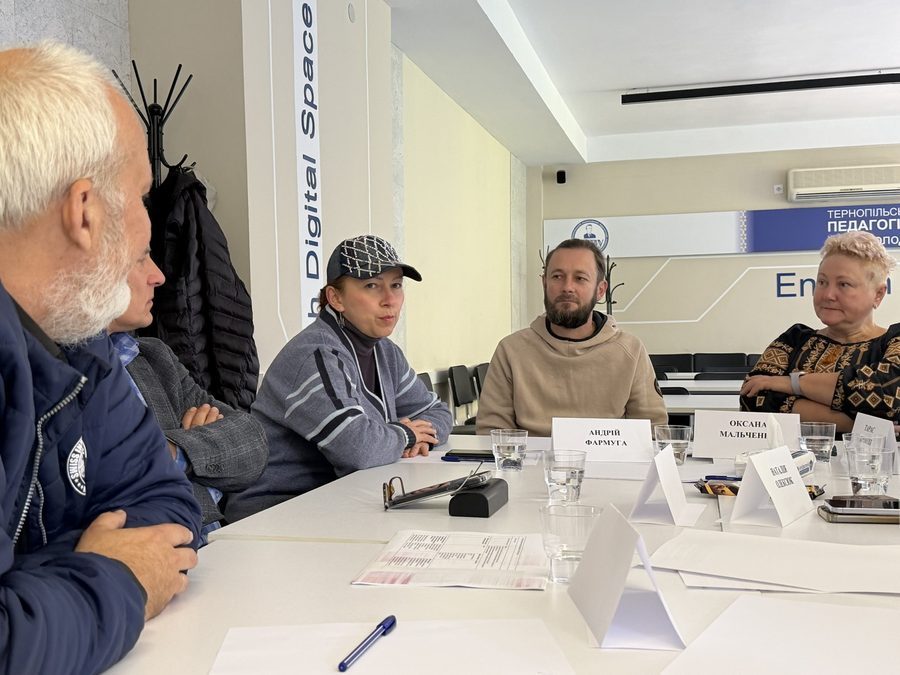
Roundtable discussion with participants in Ternopil, Ukraine

Sources: Directive (EU) 2022/2555 (NIS2); NATO, 2026 Resilience Baseline Requirements, official text, 15 September 2026. The NATO Baseline is addressed to Allied governments; NIS2 applies directly to in-scope entities.

02

Resilience built from the ground up

When crisis sets in, vertical structures weaken: leaders become unreachable, information stops flowing, and decisions wait. Societal resilience and collective agency cannot be ordered from the top. They start with a change of mindset in each person, whatever their position, and a new sense of what the team can do together.

Pinpoints of Resilience is ground-level resilience training. Rather than adding another plan at the top, we work with a diverse cross-section of your company’s employees (an executive, an assistant, an engineer, an operator) drawn from different functions and levels. We bring them rare frames of societal resilience and human agency, drawn from more than twenty years accompanying populations and teams in conflict zones and acute uncertainty, from Ukraine to the Baltic and Scandinavian countries and beyond. The aim is to strengthen your human resources so that your people act decisively and confidently in crisis, and to ease the crisis-management burden on your executive team.

Human agency

Resilience in a crisis begins with awareness of our human agency: our capacity to act and to influence the course of events, rather than seeing ourselves as their victims. It is not a plan held by executives but a capacity exercised by people across the organisation.

Ukrainians call this capacity самозарадність (samozaradnist): knowing what to do and acting decisively, individually and collectively, regardless of position in the hierarchy.

What your organisation gains

A team that can act without waiting

Your people gain the self-awareness, decision-making and horizontal leadership skills to act immediately in a crisis, without waiting for instructions from the top.

Less reliance on a few executives

Leadership distributed across functions and levels means continuity no longer depends on whether the right executive is reachable.

A head start on resilience expectations

Documented evidence, ready for your risk, compliance and HR files, of the steps you are taking at the level where continuity is actually decided: your people.

A clear basis for what comes next

Insight into where further training would strengthen your teams, and access to our partners’ full suite of executive programmes on organisational resilience.

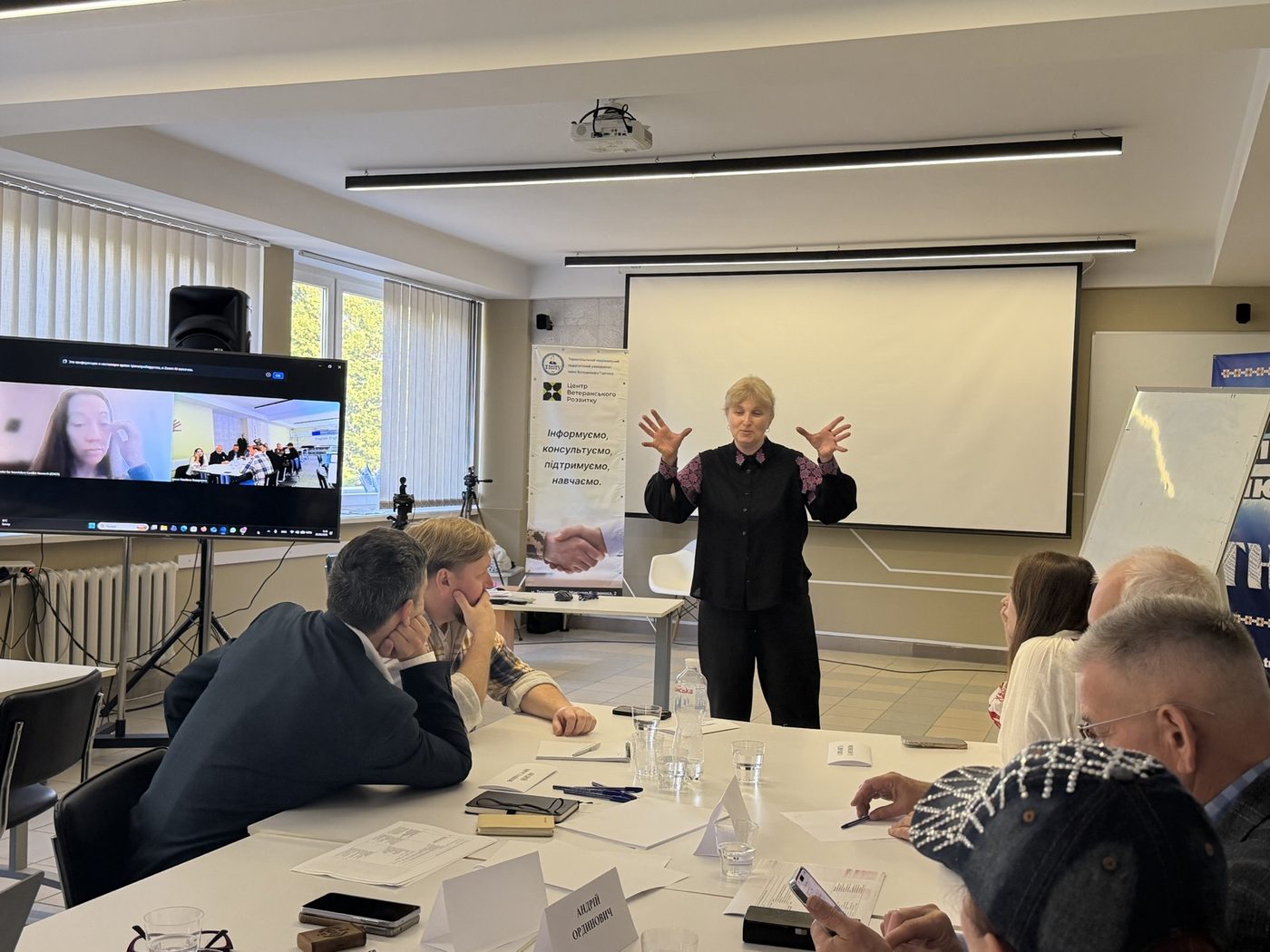
Workshop session in Ternopil, Ukraine
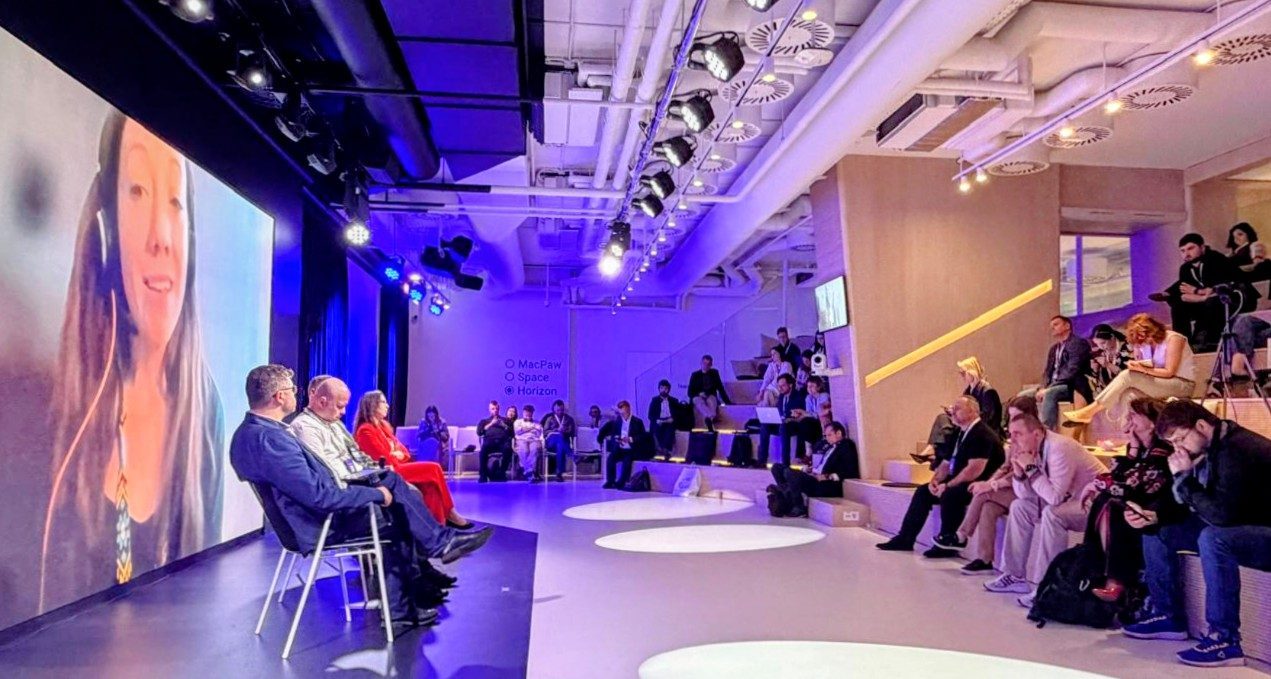
Amber French-Griette speaking remotely at the 2026 Kyiv STRATCOM Forum
03

What makes a company resilient

Our partners’ fifth annual study, Resilient by Choice (One Philosophy, 2025), surveyed 113 large and medium-sized businesses, NGOs and public bodies and interviewed 30 leaders in Ukraine after more than four years of full-scale war. Its findings point to people, not plans alone.

96%

say that in a crisis, you cannot save money on people and their well-being

55%

of leaders interviewed say adaptability matters more than detailed planning

“People do not wait for instructions but act proactively.”

What cross-functional skills and horizontal connections make possible

Five elements of resilient organisations

1

A shared grand purpose

Everyone understands why the organisation must keep going.

2

Trust as the basis for decisions

People act on each other’s information across teams and levels.

3

Decentralised responsibility

Decisions are taken where the information is, without waiting for orders.

4

Transparency and adaptability

Information flows openly, and plans bend when reality changes.

5

Investment in people

Care for people’s skills, networks and well-being.

Source: One Philosophy, Resilient by Choice: The Fifth Annual Research on the Resilience of Businesses and Organisations in Ukraine (2025), pp. 14–15, 27–28, 62; resilience.one-philosophy.com/en/2025.

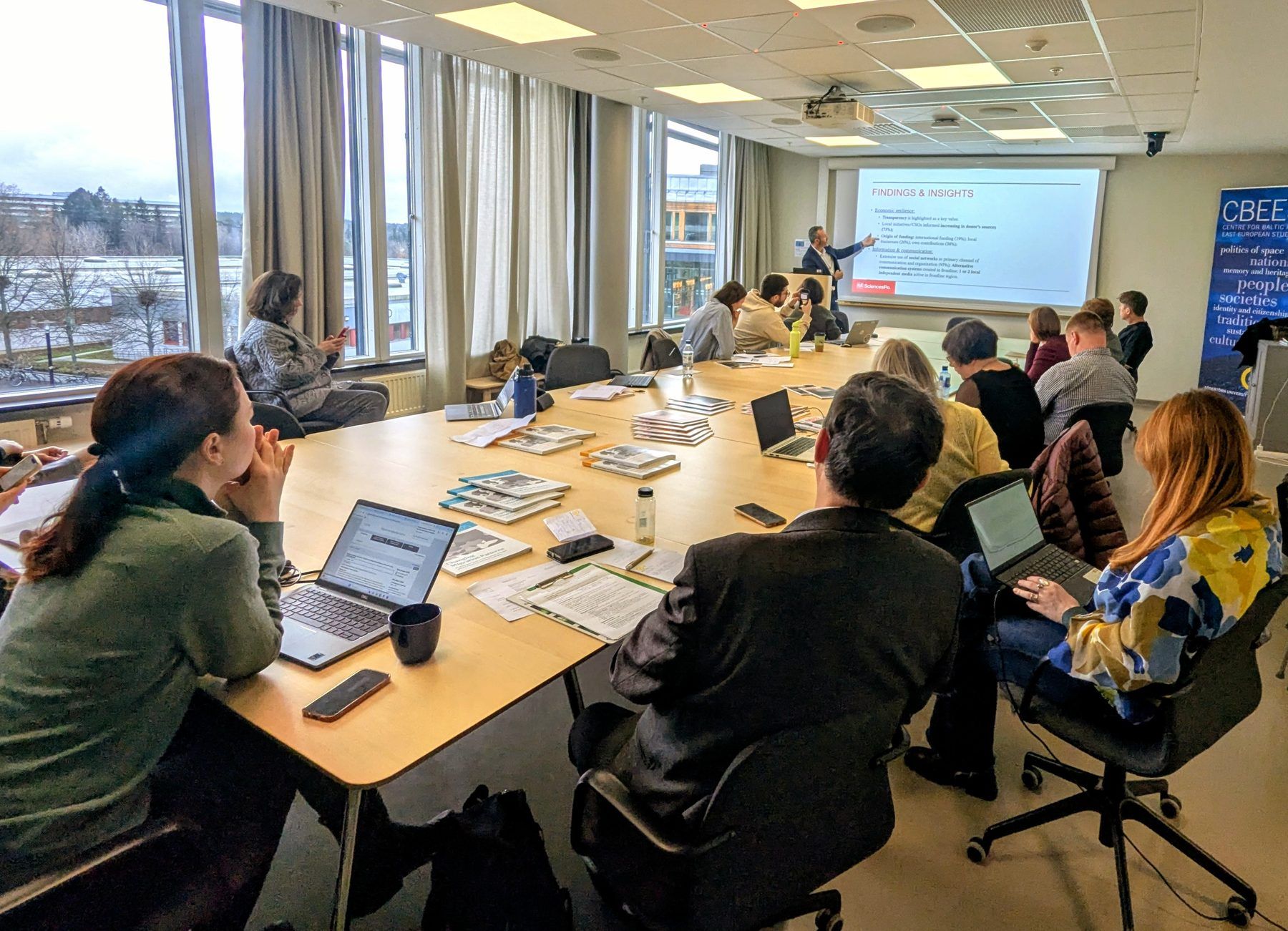
Research presentation at the Centre for Baltic and East European Studies (CBEES), Södertörn University

Business has always been part of how nations hold together

Earlier generations in Europe resisted foreign domination and the usurpation of power without weapons, through noncooperation, mutual aid and solidarity, and much more: in 1942, Norwegian teachers refused to teach the occupier’s ideology; in 1944, the people of Copenhagen went on general strike until the occupier backed down. Employers, employees and consumers took individual and collective action that shifted the calculus of conflict from outside the military sphere.

Today, the private sector again plays a crucial role in countering undue external influence and protecting democracy and national prosperity. That role is to preserve the economic and social core of the nation, and it starts with business continuity: strong operations, and above all strong people.

04

Your trainers

Amber French-Griette
ONM · Paris

Amber French-Griette

Expert in Societal Resilience and Collective Agency

Amber French-Griette is a Franco-American subject matter expert in societal resilience and collective agency in crisis: a researcher, professor, editor, trainer and facilitator, and now NGO executive, with two decades of experience across the United Nations, universities and international NGOs. She co-founded ONM in Paris. She has led training curriculum co-creations on societal resilience and horizontal leadership with people in more than 70 countries, trains with the European Security and Defence College and the Austrian Ministry of Defence, and has served as an associate professor at the Institut Catholique de Paris, ESPOL (Lille) and UNESCO.

She is the editor of Ukrainian Freedom: Collective Agency in National Defense (Columbia University Press and Ibidem Verlag, November 2026), with a foreword by Oleksandra Matviichuk, 2022 Nobel Peace Prize laureate. She led and moderated the panel “The Democracy Arsenal: Ukraine’s Civic Shield against Putin” at the 2026 Paris Defense & Strategy Forum, and spoke at the 2026 Kyiv STRATCOM Forum.

Nataliya Popovych
One Philosophy · Resilient Ukraine

Nataliya Popovych

Founder, One Philosophy (Ukraine/Denmark); Co-Founder, Resilient Ukraine (Ukraine/Estonia)

For more than two decades, Nataliya Popovych has helped organisations across Eastern Europe and beyond navigate complexity, shape their reputations and lead with integrity. Since 2019, she has led One Philosophy’s research and training on organisational resilience, including Resilient, the annual study of how Ukrainian businesses and institutions withstand crisis, and resilience training for companies in Ukraine, the Baltic states and Scandinavia.

As co-founder of Resilient Ukraine, she works to strengthen Ukraine’s capacity to withstand hybrid threats and FIMI. She works with the B4Ukraine coalition to hold international businesses accountable for their presence in Russia, and chairs Ukraine House in Denmark.

Together, we bring more than twenty years’ experience accompanying populations and teams in conflict zones and acute uncertainty. Each engagement is co-facilitated by Amber French-Griette, Nataliya Popovych, or an alternate trainer adapted to your team’s selected scenario.

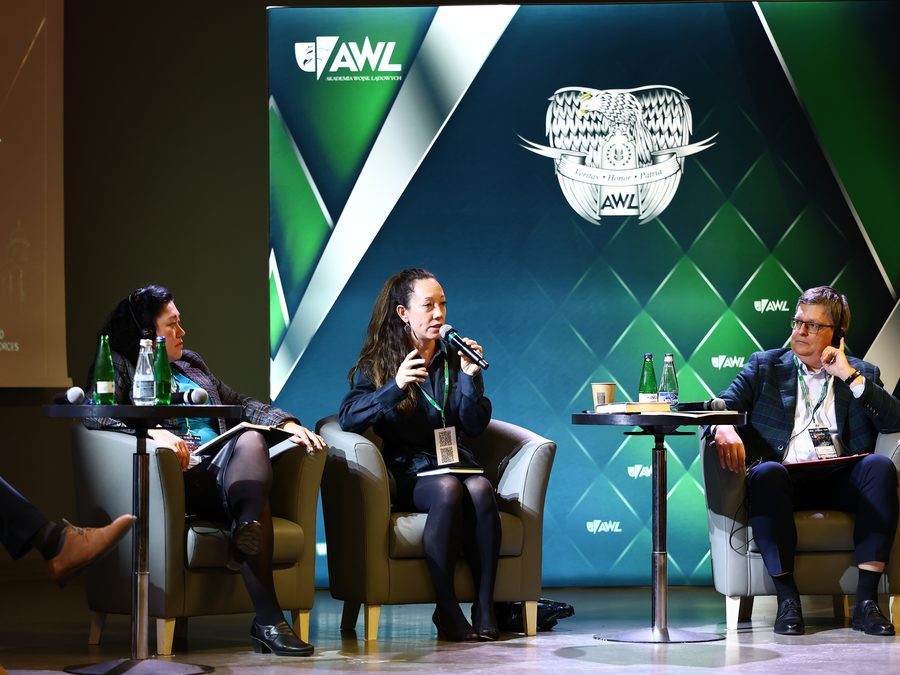
Amber French-Griette on a panel at the AWL Wargaming Conference in Wrocław
05

Practical details

Language

English or French

Location

Paris or the Paris region (Île-de-France), on your premises

Scheduling

Limited engagements available in the first half of 2027

Contracting

One contract with ONM, lead organisation

Is your company ready when crisis reaches your people?

If Pinpoints of Resilience seems worth your time, we would welcome a 20-minute conversation.

Get in touch →

Credits

These resilience services were co-designed by Amber French-Griette and Nataliya Popovych, with substantive input from Oleksandra Keudel, PhD, Denys Sukhanov, Antoine Courty, Hortense Blazsin, PhD, Silvia Fierăscu, PhD, and Inna Melnykovska, PhD.